Guides

Peter Justin Yu
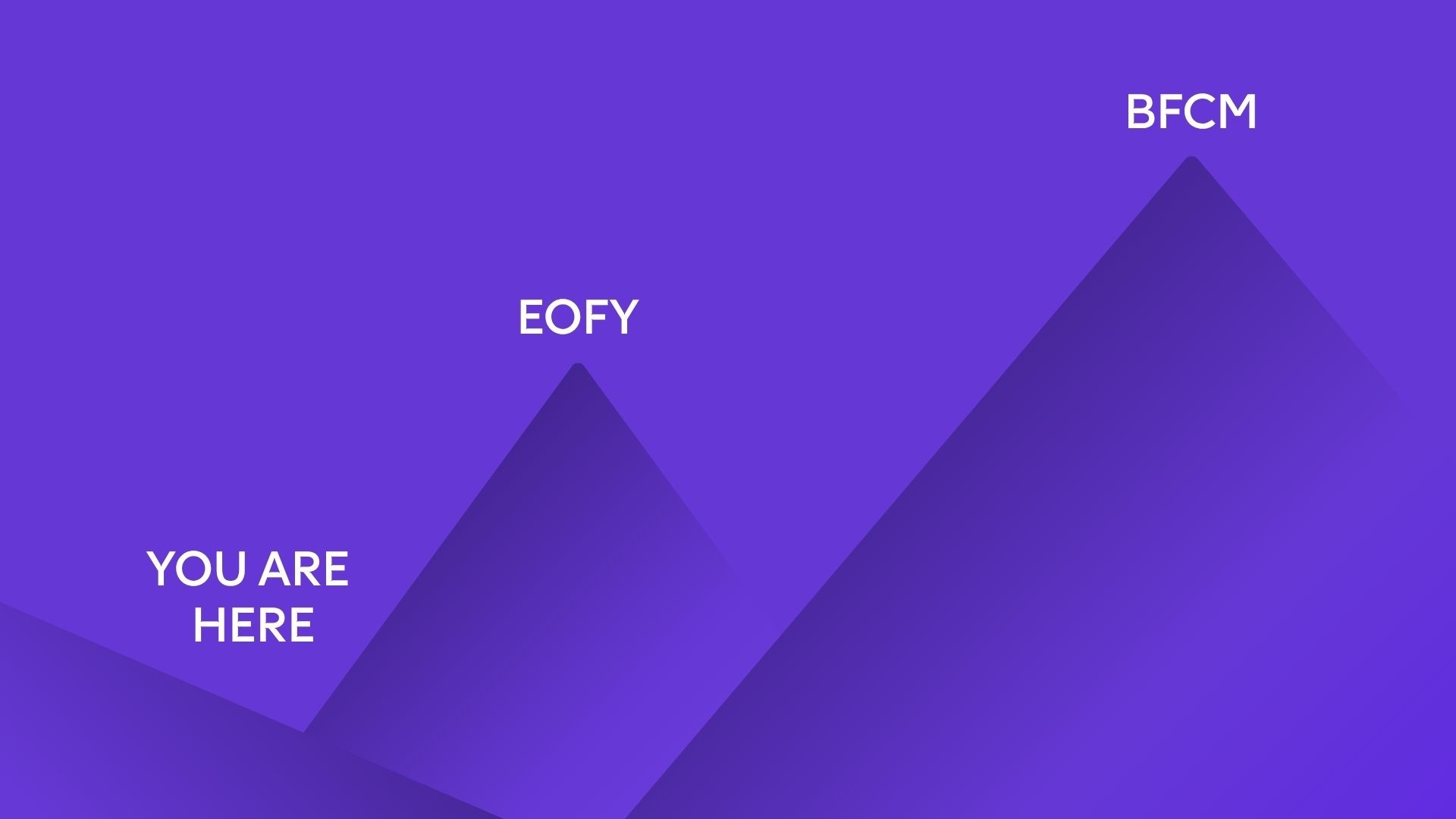
Most retailers treat End of Financial Year and Black Friday Cyber Monday like two completely separate events. One is a clearance exercise. The other is the biggest revenue opportunity of the year. But the brands quietly winning in November are not starting fresh. They are building on what June already told them.
According to Roy Morgan Research, Australian shoppers are tipped to spend $10.5 billion on EOFY sales this year, and retailers know that much of that demand is driven by consumers targeting sales events before committing to big-ticket purchases.
That kind of deliberate, high-intent buying behaviour generates something more valuable than revenue. It generates signal.
EOFY is a stress test. It forces fast decisions: which stock moves, which doesn't, what price point actually unlocks a purchase, which customer segments show up when there's a genuine reason to buy. Run it well and you don't just clear inventory. You come out the other side with one of the most valuable assets a retail brand can hold heading into the back half of the year: real buying behaviour from real customers, under real commercial pressure.
The question is whether you're paying attention to it.
What Cleared, and Why It Matters
Not all clearance is equal. Some SKUs moved because they were genuinely loved and price was the last remaining barrier. Others moved because you discounted hard and still barely shifted volume. The difference matters more than most brands realise.
The products that cleared quickly at a modest discount are your BFCM anchors. They are high-demand lines where a well-timed promotion drives conversion without gutting your margin. The products that needed deep cuts to move are a signal to be cautious.
In our data, during BFCM, average discount rates can hit 21%, more than double the yearly average.
Going in without knowing which of your SKUs can actually hold margin under that kind of pressure is how brands end up busy in November but broke in December.
ProfitPeak already surfaces this breakdown for you. Your SKU-level margin performance across EOFY is right there in the platform, ready to inform which products earn a place in your BFCM catalogue and which ones don't.
Which Campaigns Actually Drove Margin
Revenue is easy to manufacture during a sale period. Margin is not.
EOFY campaigns that generated strong top-line numbers while quietly eroding the bottom line are not a playbook worth repeating.
Ad costs on major platforms soared by over 30% during BFCM 2025, making paid acquisition intensely unprofitable for many brands who hadn't done the work beforehand to know which channels were actually worth backing.
The brands that spend smarter in November are the ones who already know which channels, creatives, and audience segments actually delivered profitable growth — not just clicks and conversions. Did paid social bring in new customers who spent above your average order value? Did email reactivation outperform acquisition on a cost-per-revenue basis? These are not abstract questions. ProfitPeak tracks channel-level profitability so you can see exactly where your EOFY spend worked and where it didn't. That same read directly shapes how you allocate your budget across a six-week BFCM build, so you're not guessing. You're going in with evidence.
Which Dormant Customers Came Back, and What They Did Next
Reactivation is one of the most undervalued outcomes of any sale period. EOFY reliably brings lapsed customers back to market, but what they do once they return tells you everything about whether they're worth pursuing again.
The economics here are straightforward. Reactivating a dormant customer costs five to seven times less than acquiring a new one, and yet most brands keep chasing cold audiences while their best opportunities sit idle in their database.
A 5% increase in customer retention can increase profits by anywhere from 25% to 95% — which makes every lapsed customer who came back during EOFY a strategically important data point, not just a sale.
Did they buy once and disappear? Or did a reactivated cohort from June go on to repurchase in the months that followed? The customers who came back with genuine intent, rather than purely hunting for a discount, are your highest-priority BFCM audience. You already ran the experiment. You already know who responded.
ProfitPeak's customer segmentation identifies exactly who these people are, what brought them back, and what they bought. So come November, you're not prospecting cold. You're re-engaging a warm, known audience with a relevant reason to return.
November Rewards the Work You Do in June
The brands that discount less and convert better during BFCM are not the lucky ones. They're the prepared ones.
Power Retail shared that Australians made 15% more purchases during last year's BFCM window than the year before, with average basket value 5.7% higher — but that growth was not shared equally.
It went to the brands that showed up with the right products, the right audiences, and the right offers. Not the ones who discounted hardest.
McKinsey's research warns that aggressive, undifferentiated price cuts erode margin and weaken brand equity. The brands that win are the ones with a clear view of which products deserve promotion, which channels deserve budget, and which customers deserve a personalised reason to come back.
That clarity doesn't come from guesswork. It comes from taking EOFY seriously as a source of strategic insight, not just a way to shift old stock.
All of this data is already sitting in ProfitPeak, ready for your brand to use right now. And with ProfitPeak 2.0 on the way, surfacing these insights and acting on them will be faster and more intuitive than ever. When November arrives, you won't be scrambling to figure out your strategy. You'll already be executing it.
Peter Justin Yu
Founding Marketer
Peter is a veteran marketer with more than 15 years in tech - securing three successful startup exits by amplifying game-changing businesses across APAC through digital storytelling.